Useful where visual presentation, manual inspection, infusion and removal of the spice are important.
Whole versus broken form
Whole vs Broken Star Anise: Which Form Should You Buy?
Whole and broken are physical forms, not complete quality grades. Select the form by application, then define the measurable grade, safety and documentation requirements.
Purchasing priorities
Three decisions to make first
Useful where material will be ground, blended, filtered, extracted or otherwise processed.
Compare price only after crop, cleanliness, chemistry, treatment, testing, packaging and delivery terms match.
When whole star anise adds value
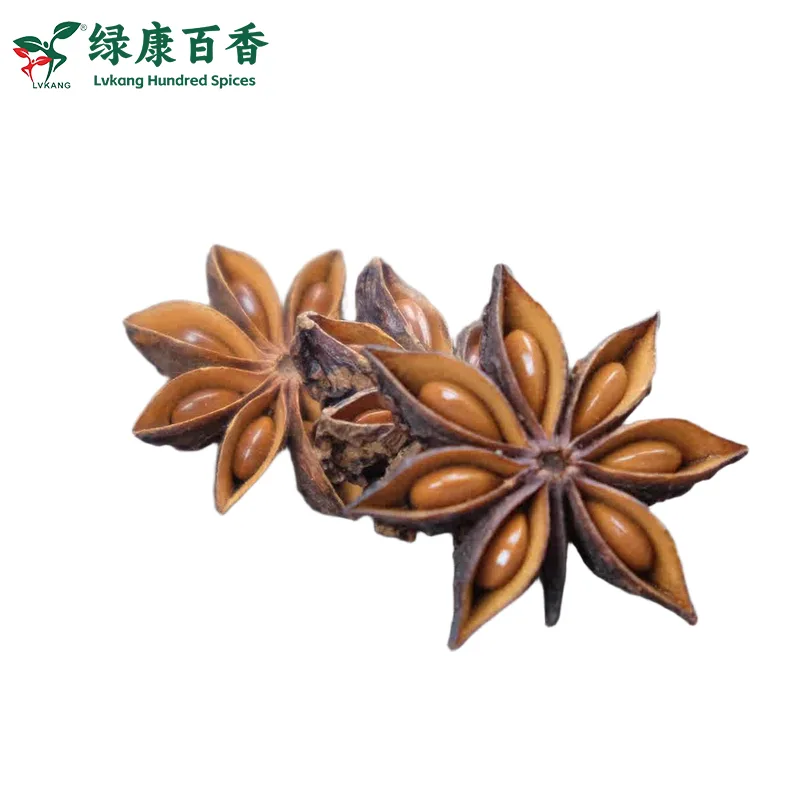
Whole fruit is often preferred for retail jars, clear pouches, foodservice presentation and recipes where intact spices are removed after infusion. The buyer should still specify acceptable breakage, colour, fullness, stems, foreign matter and other visual criteria.
When broken pieces make commercial sense
Broken pieces can reduce unnecessary presentation cost for milling, seasoning, extraction and industrial cooking. Piece size, seed or stem content and cleanliness remain part of the quality specification; broken material should never be purchased without an acceptance basis.
Crop name and form are separate decisions
Autumn Star Anise and Spring Star Anise Whole identify whole-fruit crop products, while Spring Broken Star Anise Pieces identifies a broken spring form. Crop terminology does not automatically determine grade or suitability.
Use samples to compare like with like
Ask for current-lot photographs and a representative sample. Evaluate the sample in the real process, then attach the approved reference and written limits to the purchase order.
Questions buyers ask
Is whole star anise always better?
No. It can be better for presentation, while broken pieces can be more efficient for processing.
Is broken star anise the same as powder?
No. Broken pieces remain visible fragments; powder is milled material and requires its own particle-size and quality specification.
Continue research